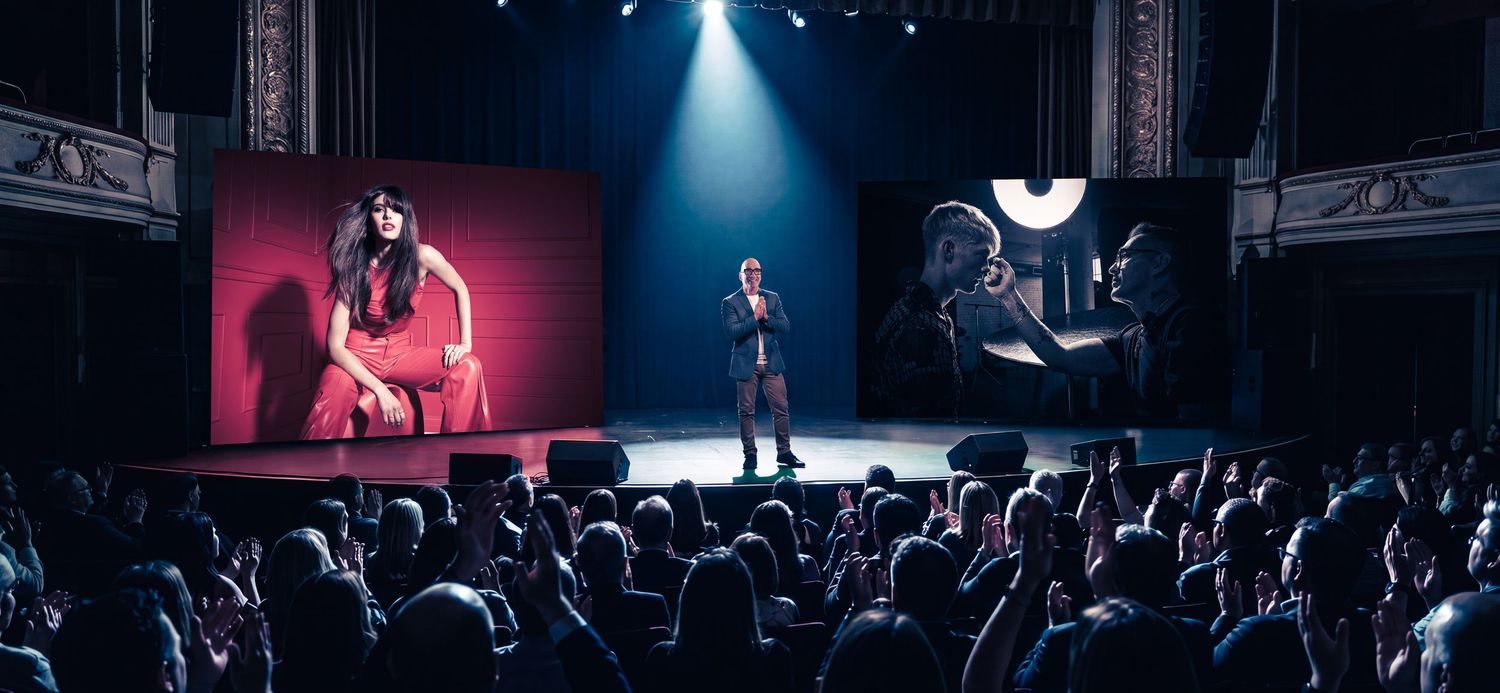
Your audience decides what to believe about you in 13 milliseconds, before they've read or heard a single word.
After that instant impression, you have less than two seconds on a scroll before the thumb moves on and takes your credibility with it.
The secret language of images is
your #1 problem.
A single image has the power to
Decide an election.
One face, judged for competence in under a second, with zero policy knowledge. That single glance predicted the outcome of 68.8% of U.S. Senate races before a single vote was counted.
Turn a nation against a war.
One photograph, Nick Ut's 1972 image of a girl fleeing a napalm strike, is credited by historians with shifting American public opinion on Vietnam faster than any speech.
Wipe value off a company overnight.
One viral clip of a passenger dragged off a United Airlines flight in 2017 moved the stock the same day. The company hadn't even finished drafting a statement.
Predict how good you are at your job.
Strangers watching a silent 30-second clip of a teacher, no sound, no test scores, predicted that teacher's real end-of-semester student ratings almost as accurately as watching the entire semester unfold.
Turn a bad week into a bank run.
In 2007, TV footage of customers lined up outside Northern Rock's branches amplified a liquidity problem into a full-blown panic; depositors pulled a billion pounds out in a single day.
Your audience forms that same first impression of your brand in 13 milliseconds, before they've read or heard a single word.
Your images can undermine everything you're trying to say — and you won't see it coming.
Lost authority. The wrong signal of value. A dozen invisible cues, decided in that first second. International campaign photographer Alec Watson decodes that first impression and hands you a system to get it right, on purpose.
That's the secret language of images.
Why Alec
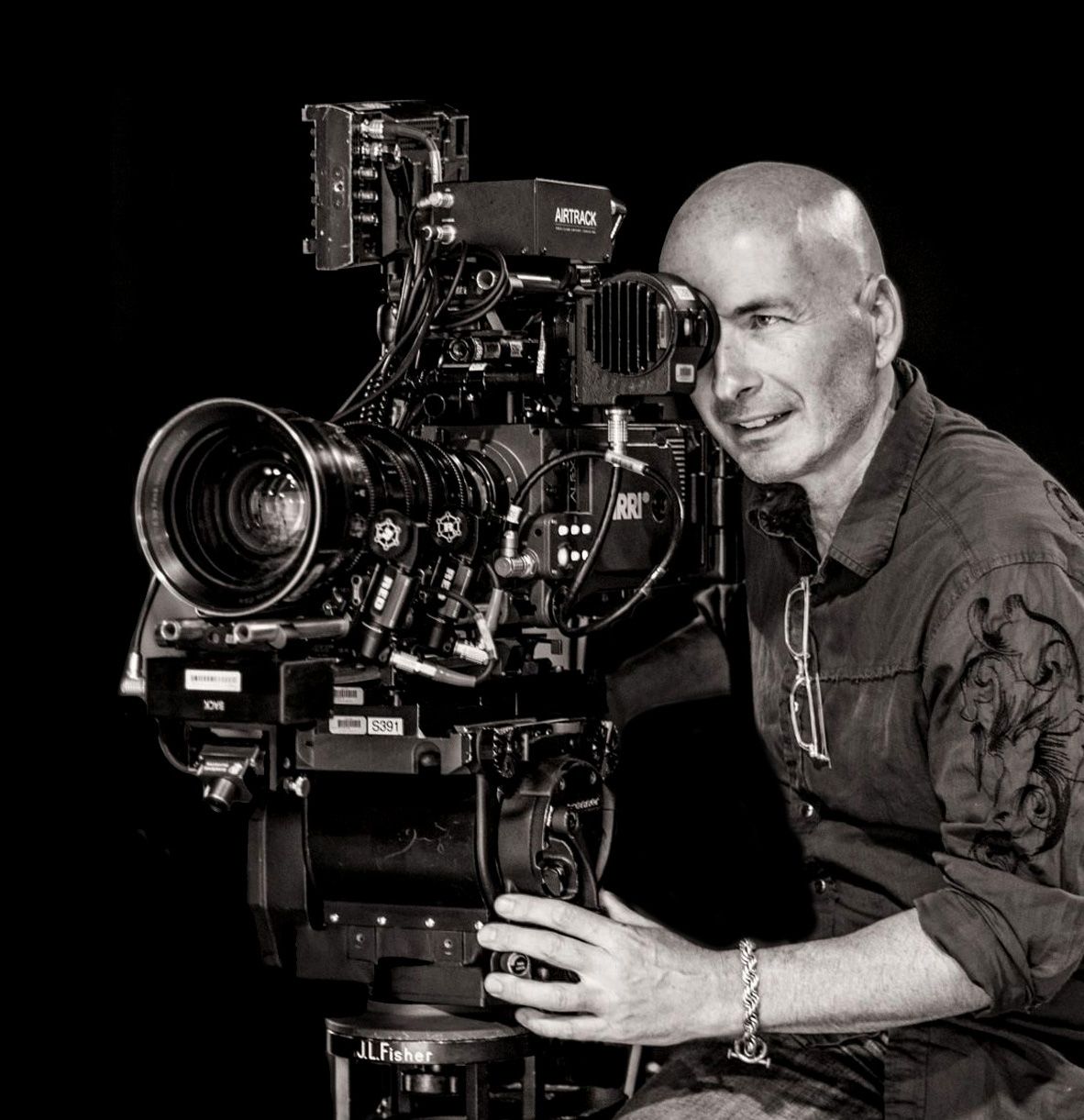
Harvard-trained in Digital Media Design. Two decades directing photography and video for Coca-Cola, Starbucks, Microsoft, Goldwell, KMS, Sexy Hair, and Britney Spears, among others.
The turning point came on a campaign built around a global pop star: every advantage money could buy, images that stopped you cold — and the brand still missed. Celebrity and beautiful pictures aren't the connection. Something underneath them is.
Alec is one of the few photographers who went to Harvard specifically to study how images teach, persuade, and earn trust — not just how to make them beautiful. That's what he brings to a stage: twenty years making the world's biggest brands believable, distilled into a system any business or person can actually use.
And the stage is home. Before the camera, Alec's first career was music — three gold records and a platinum as a songwriter and producer, and years touring with Doug and the Slugs, Rhodes and Marshall, and Ronna Reeves. He has played to live rooms his whole life. A keynote is just a different setlist.
Alec is a lighting genius, he always raises the bar way up on creative. The set is always pure fun and our images are always outstanding. Alec is our secret weapon. Stephanie Goranson — Creative Director, Henkel
Reserve space here for a speaking-specific testimonial once available.
The idea
For twenty years, global brands paid Alec Watson to control what people feel before they read a headline. Every business does the same thing now, whether they mean to or not: a solopreneur's Instagram grid, a home business's product shots, a startup's About page.
Every image posted is telling a story. The only question is whether you're telling it on purpose, with authority, in the secret language that reinforces the outcome you actually want.
This is a decoding of the visual signals that build trust, create desire, and make a brand (or a person) instantly believable, pulled from two decades on some of the biggest sets in advertising.
What your audience walks away with
Book this for a room that needs to leave with something they can use that afternoon, not just a good feeling.
- How to earn attention in the first two seconds, and why most of what businesses post never gets past it.
- A five-step check to catch the exact moment their own brand's imagery contradicts its own message, before their audience reacts to it.
- Why "awareness" campaigns (the kind big brands run with big budgets) actively fail small and mid-size businesses, and what actually works instead.
- The specific visual signals (eye contact, camera angle, color consistency, touch, where a photo directs the eye) that make a brand or a person instantly believable on camera.
- A storytelling structure that gets a message remembered days later instead of forgotten by the next scroll; 63% of an audience remembers a story, only 5% recall a single statistic.
- What AI has changed about visual trust, and the disclosure trap most brands are walking into without knowing it.
- Live, practical camera coaching your audience can use immediately, on their own headshots, Zoom presence, and team content.
Talks & formats
Formats are flexible: 20-minute keynote, 60-minute workshop, or a custom session for internal teams/leadership offsites.
Book Alec to speak
I take a limited number of speaking dates each year. Tell me about your event, your audience, and the one thing you want them walking away believing.
Check available dates →Available worldwide, in person or virtual.
Keep reading for the research behind the talk, and the five-step framework Alec teaches live.
The scroll is where business happens now
Every business tells its story in the same feed now: a solopreneur, a local shop, a billion-dollar brand, scrolled past by the same thumb, judged by the same reflex. Facebook's own research puts average attention on a single piece of mobile content at 1.7 seconds before someone moves on; people spend over two hours a day scrolling, and almost none of it lands on what any single business paid, filmed, or built to be seen.
Every scroll past is a real cost: the time it took to make, the money it took to produce, the energy spent chasing a customer who scrolled on anyway. This talk is about how you make that scroll pause, and make it count.
See it happen in the room
Alec flashes a single frame for half a second: three guys on a couch wearing jerseys, beer airborne, popcorn mid-flight, one already out of his seat. Every person in the room gets it instantly: game seven, overtime, their team just scored.
Then he puts up what it would actually take to say the same thing in words: the names, the sport, the score, the room, the snacks, the clothes, the couch. A full paragraph. Still incomplete.
That's not a metaphor for how images out-communicate language. It's a stopwatch.
Trust used to be free. AI made it expensive.
For nearly 200 years, a photograph did a job words couldn't: it was evidence. If you saw it, it happened.
AI breaks that. Fake images looking real is the obvious problem; the worse one is that once people know fakes exist, they can wave away real evidence too. Legal scholars call this the liar's dividend. And the assumed fix, labeling it "AI-generated," backfires. Research shows disclosure lowers trust more than it protects it.
Not an argument against AI, Alec builds AI reels for major brands right now. It's an argument for knowing which visual signals still earn belief now that the camera is no longer an alibi.
Aligned, it compounds. Misaligned, it costs you.
Because the eye votes before the mind does, whatever the image says first is what people believe; words rarely get a fair chance to argue them out of it. When the visual message and the brand's actual promise match, trust compounds every time someone sees it again. When they don't match, the image wins anyway; the brand just loses control of what it won.
- Name the promise. Before the shoot, decide the one thing this brand or person needs someone to believe in the first three seconds.
- Translate the promise visually. Narrow, restrained color palettes read premium. Fully saturated colors read budget-conscious. Light, distance, wardrobe, pace: all of it is a translation.
- Audit for contradiction. Not "is this a good photo," but "does this photo argue against the words next to it."
- Let the image lead. Copy that repeats what the image already proved is wasted.
- Cover the words and test it. If the promise isn't still obvious, the image isn't carrying it.
Still reading? Then you get it.
You've seen how it works. Now let's put it in front of a room that will remember it. Tell me about your event and the belief you want your audience walking out with.
Check available dates →Available worldwide, in person or virtual.